
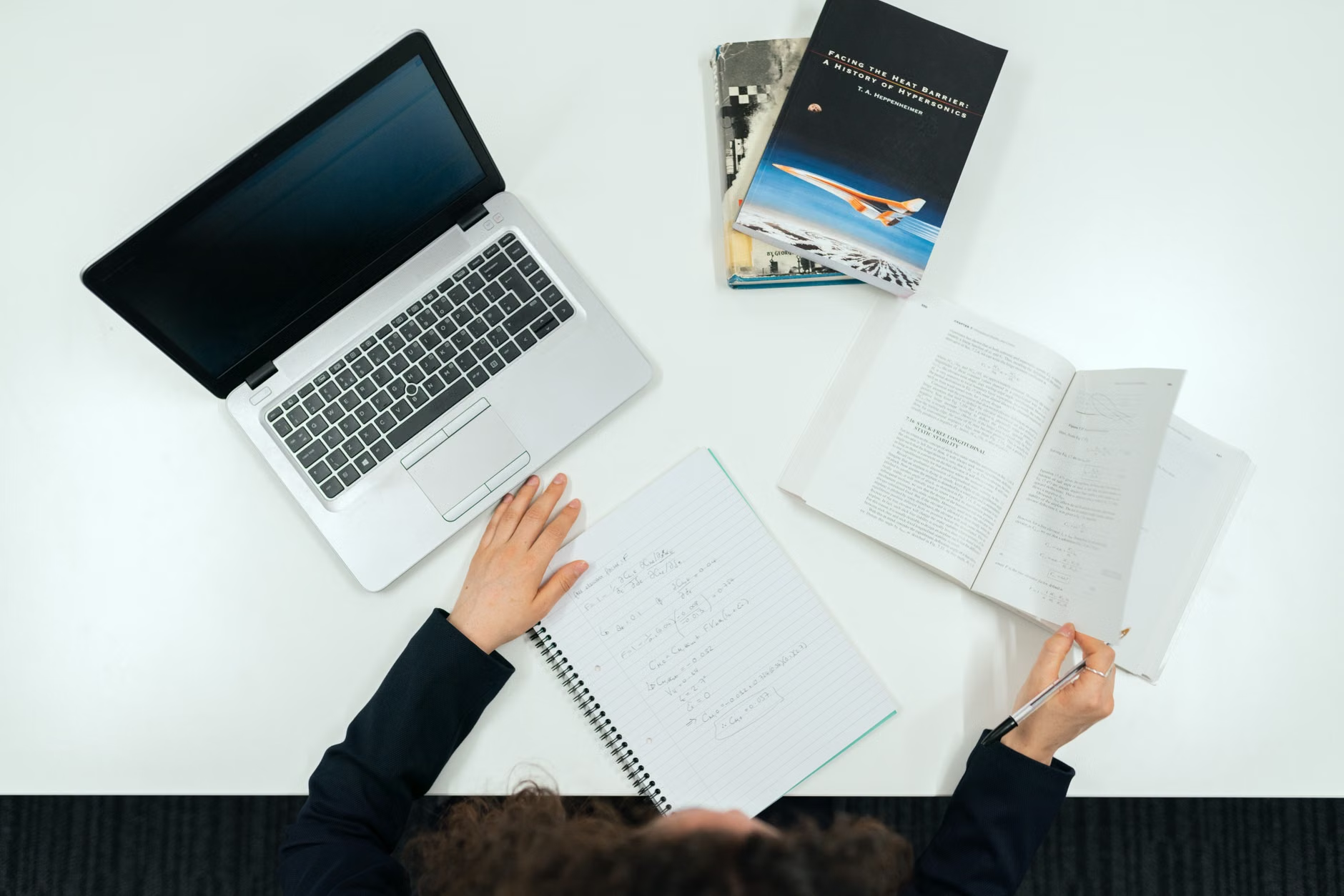
Study for an open-book exam by learning enough to recognize the task, choose the relevant concept or method, and begin an answer without searching. Keep formulas, exceptions, evidence, exact definitions, and source locations in a compact permitted reference, then test your knowledge and that reference with realistic questions.
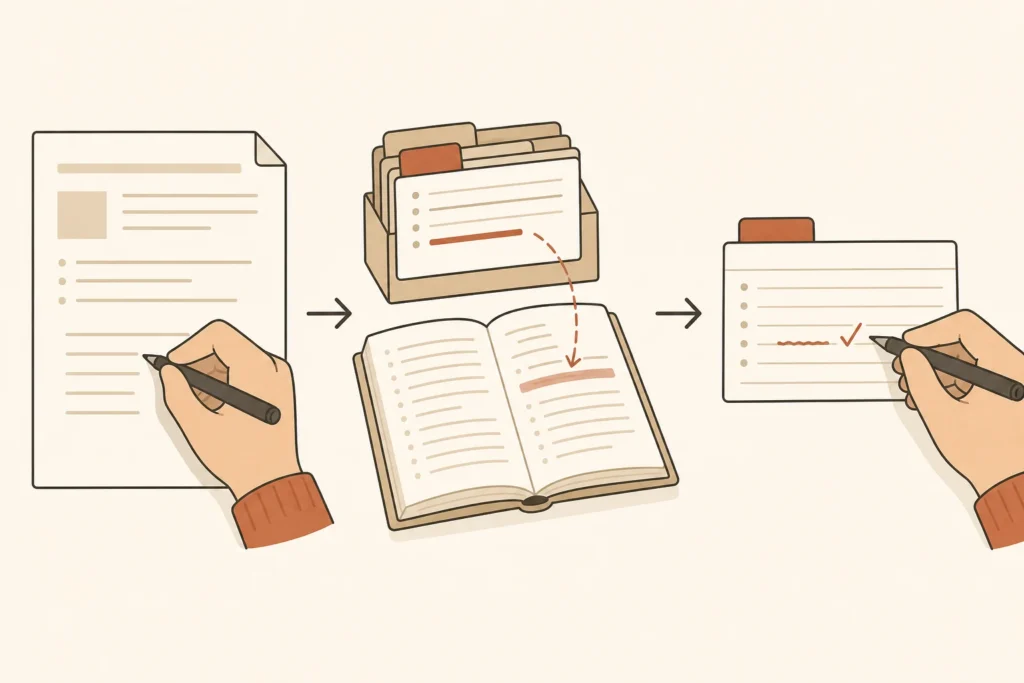
A thick binder may contain everything and still be a poor exam tool. The useful dividing line is whether a piece of information helps you decide how to answer or merely supplies a detail once that decision has been made.
The exam rules
The current exam instructions, rubric, time limit, and question formats should settle what you prepare. Confirm whether “open book” includes handwritten notes, printed materials, digital files, web access, calculators, or only a specific textbook, along with the rules for citations, collaboration, messaging, and generative AI, because an allowed resource in one class may count as unauthorized help in another.
Past questions and rubrics matter more than the label “open book” because they reveal whether the exam mainly asks you to calculate, diagnose a case, compare explanations, interpret evidence, or build an argument. Those demands should shape both your studying and your notes.
What belongs in memory?
You should be able to identify what a question is asking, retrieve the main concept or procedure, and sketch the opening of a response without looking anything up. An answer that always begins with a search leaves the notes carrying decisions you have not practiced, while supporting details can stay external when you know why you need them and where they live.
One Sunday afternoon, with a load of laundry running beside the kitchen, I renamed course PDFs by lecture date until the folders looked immaculate. The practice question afterward sent me through six files and cost me the second question I had planned to attempt, so the next evening I replaced the date-based labels with a one-page topic index.
Support for different question types
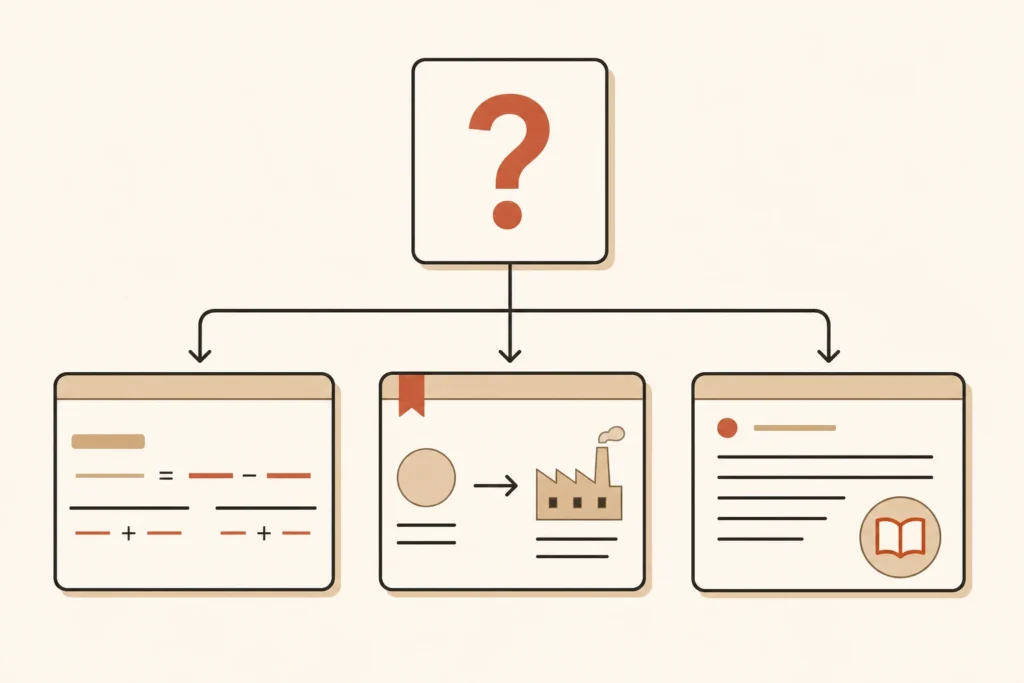
| Exam task | Retrieve without looking | Keep easy to find |
|---|---|---|
| Calculation or problem-solving | Signals that identify the method, the setup, and basic checks | Formulas, variable definitions, conditions, units, and one useful worked setup |
| Application or case analysis | The concept that fits the case and why it fits | Exact definitions, exceptions, decision criteria, and contrasting examples |
| Analysis or essay response | The command in the prompt, a defensible position, and the reasoning order | Evidence, quotations, dates, source locations, and required citation details |
Many exams mix these demands. A statistics question may require calculation and interpretation, while an essay may ask you to apply a theory to unfamiliar evidence. Prepare for the combined task rather than forcing the whole course into one note format.
Searchability is a practical test
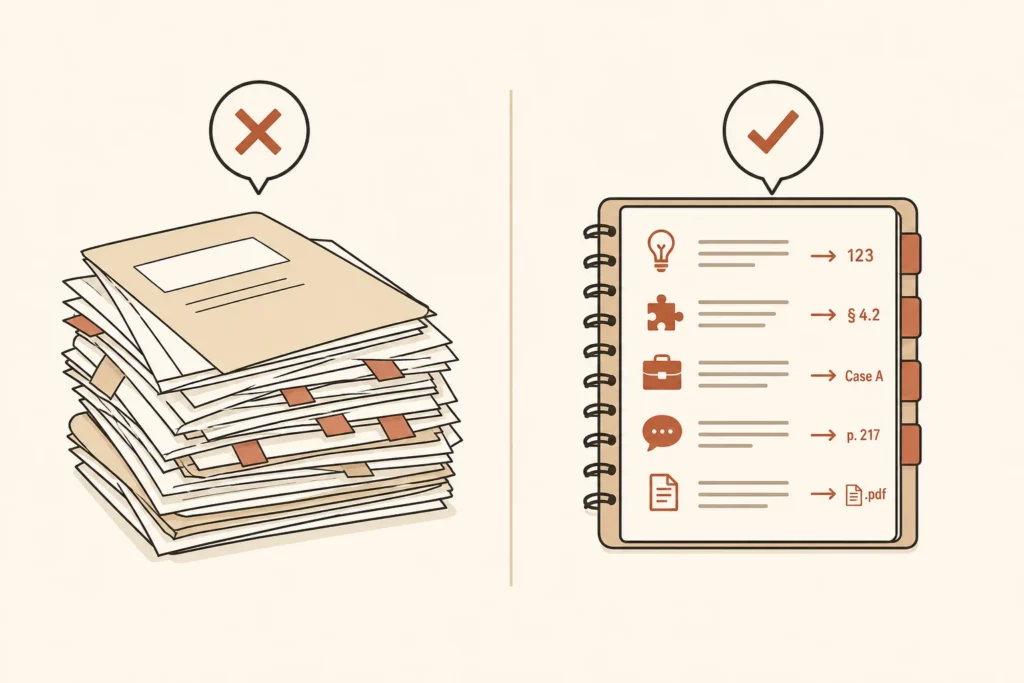
A searchable reference uses the language you are likely to meet in a question, connecting each concept, problem cue, case, or command word to a direct destination such as a page number, section heading, file name, or working link. Material that appears in several places needs one main location, or the exam becomes a comparison of versions rather than an answer.
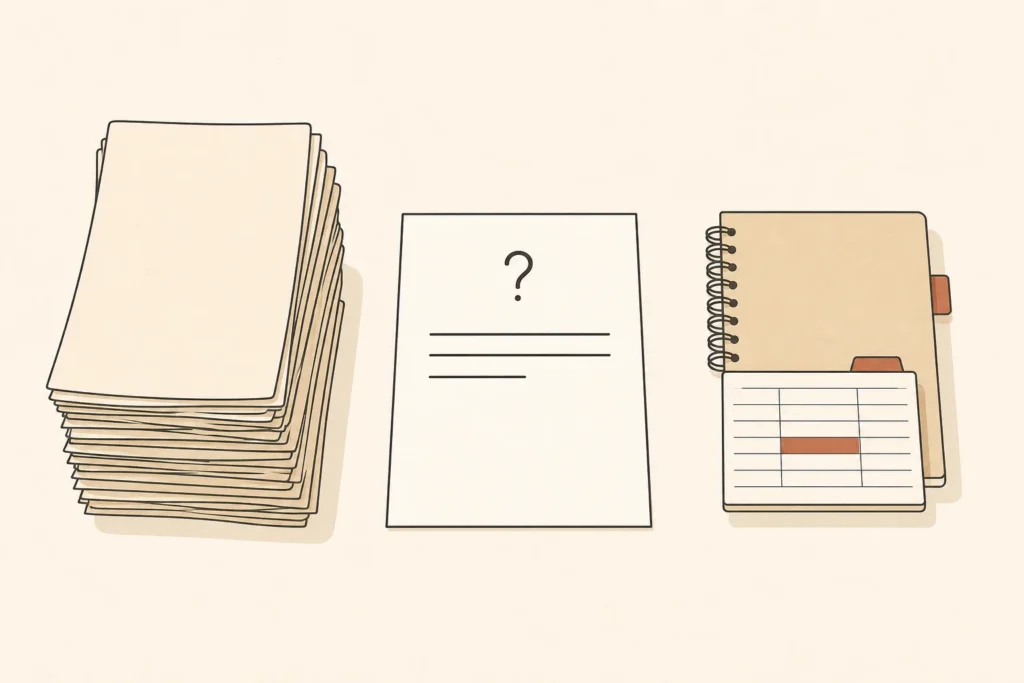
Digital files need to be searchable and available under the actual exam conditions, while paper materials usually benefit more from a short front-page index and a few meaningful tabs than a decorated chapter edge. Practice questions can tell you whether anything else deserves space.
Timed practice
Use a released question or representative prompt with the real time limit and permitted materials. Identify the command, choose the likely concept or method, and write the first part of the setup or outline unaided, consulting the reference only for information that moves the answer forward and noting what caused any delay.
A delay caused by misreading the task or failing to choose a method calls for more practice recognizing that question type, not more pages. Knowing what you need but failing to find it points to a bad label or location, while finding the information but being unable to use it calls for another application or calculation. When searching itself consumes too much time, remove low-value material and choose a point at which you will continue with the best answer available.
Question-based retrieval and practice across varied examples can support later application better than repeatedly reviewing the same familiar material. It also gives you a less flattering but far more useful test of your notes: whether they help when the question is phrased differently.
Take-home exams and integrity boundaries
An untimed or take-home exam reduces immediate lookup pressure but can increase the temptation to collect material instead of answering, so the reference may need more emphasis on evidence, citations, and source locations. Question-first preparation still helps, and the availability window must also leave room for planning and revision.
Open-book status does not automatically permit copying, collaboration, web searches, shared documents, or AI assistance, and the course rules determine which of those resources are allowed.
For a first test, give one representative question the expected time, attempt the opening unaided, and finish with permitted notes. Make only the change revealed by the biggest delay: a failed search improves the index, while a failed decision identifies what to study next.
Sources and references
- Cornell University Learning Strategies Center: Open-Book Exams
- University of Melbourne Academic Skills: Open-book exams
- UNSW Bengaluru: Take-home & other open-book exams
- Learning and Instruction: Effects of retrieval practice on retention and application of complex educational concepts (2025-09-23)
- Journal of Experimental Psychology: Applied: Retrieving and applying knowledge to different examples promotes transfer of learning