
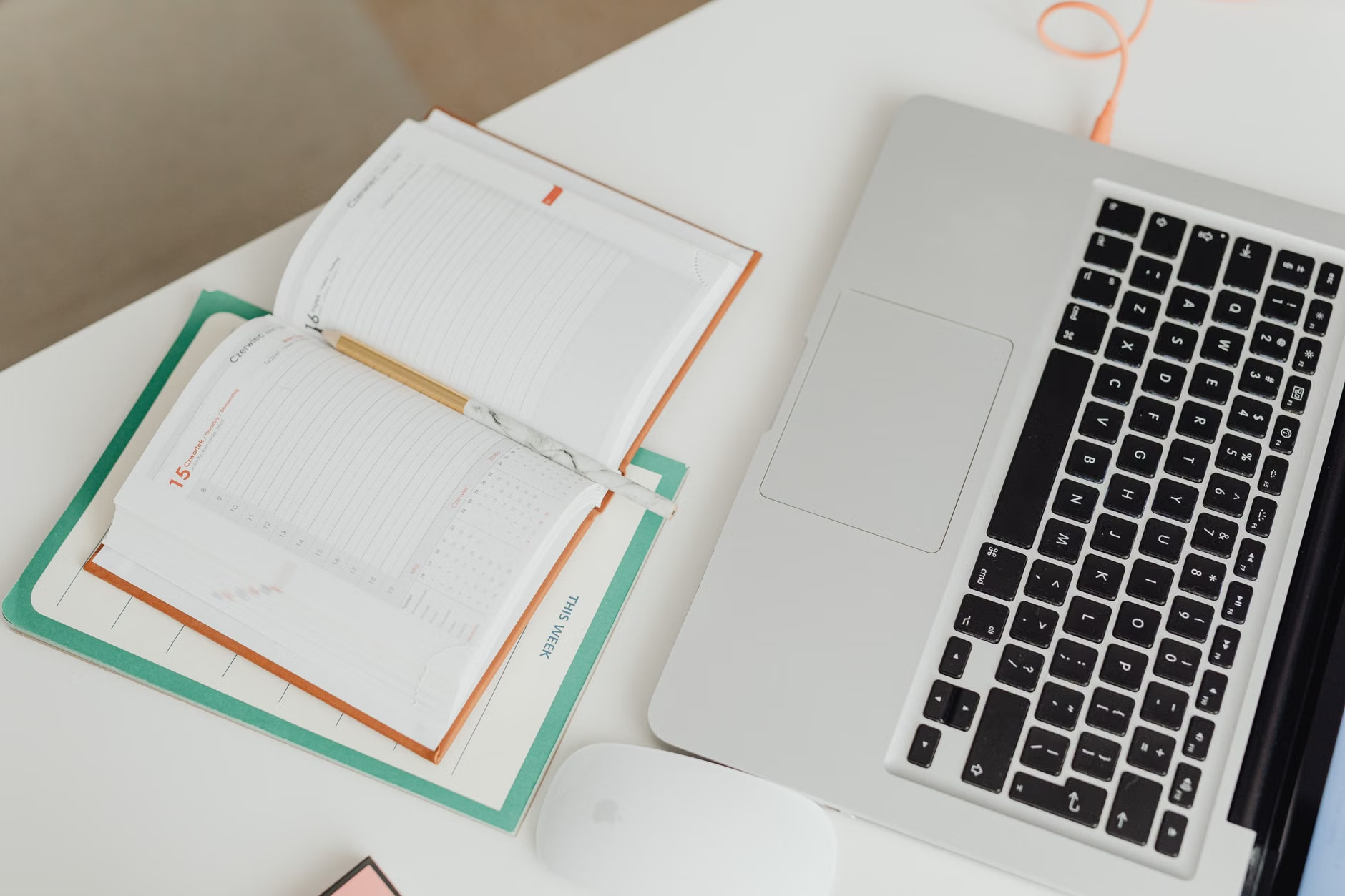
A useful back-to-school plan is less about buying supplies and more about removing small points of failure before they start repeating every weekday. Missing a form, not knowing where assignments live, or realizing on night two that there is no charger in the backpack creates more stress than most students expect. The checklist that actually helps is the one that turns school from a vague intention into a working system.
That usually means planning in layers: first the dates and requirements, then the tools and routines, then the first-week adjustments once real classes begin.
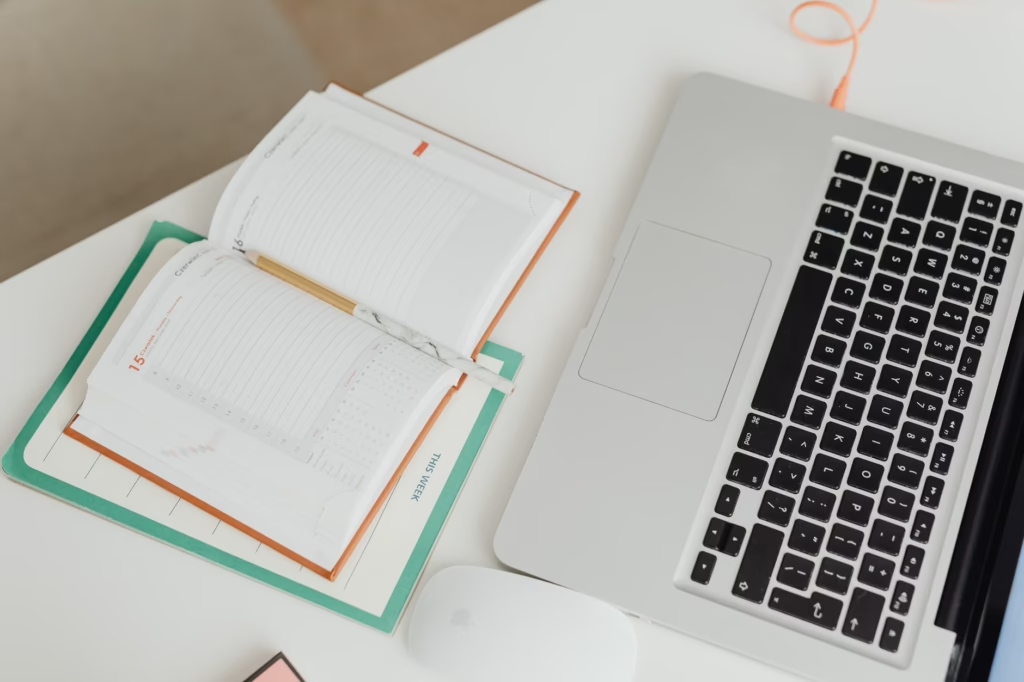
Start with the dates that can derail the semester
Before shopping or color-coding anything, do a calendar sweep. Open the school portal, email, class schedule, and any orientation or registration pages. Write down the first day, pickup or commute timing, orientation events, book pickup, club tryouts, technology setup steps, tuition or fee deadlines, and the first week’s major commitments. Students who skip this step usually do not have an organization problem. They have an incomplete-information problem.
If college is part of the picture, financial aid and account deadlines belong on the same calendar as class deadlines. Federal Student Aid says schools and states can set FAFSA deadlines earlier than the federal deadline, so waiting for the “last” deadline can still reduce aid opportunities. And once a student turns 18 or attends a postsecondary institution, FERPA rights generally transfer to the student, which changes who can access records and who should be handling forms, billing follow-up, and registration details. (studentaid.gov)
- Check every school system you might need: email, portal, learning platform, printed packets, and any team or activity apps.
- Put all fixed dates into one calendar, even if you also use a planner later.
- Set two reminders for important deadlines: one a week ahead and one the day before.
- Make a short list of missing items, such as forms, passwords, supply lists, or schedule questions.
- Ask questions now, while offices and teachers are easier to reach than they will be during the first chaotic week.
Give every class a place for tasks, papers, and due dates
The simplest working setup is usually the one most students can maintain. Each class needs three homes: one place to capture assignments, one place to store materials, and one place where deadlines stay visible at a glance. That can be a paper planner plus one folder per class, or a calendar app plus clearly named digital folders. The important part is not which tool looks better online. It is whether a homework sheet, teacher handout, PDF, lab notice, or discussion prompt has an obvious place to go the first time it appears.
- Use the exact course names from the official schedule on folders, notebooks, and digital files so nothing gets buried under vague labels like “school stuff.”
- Keep one fast capture tool for unfinished tasks. A planner, notes app, or sticky-note system can all work if it is checked daily.
- Separate active materials from archived materials. Current papers should be easy to reach; older papers can move to a binder section or storage folder.
- Pack the bag for tomorrow before dinner or right after homework, not at bedtime when forgotten items are more likely.
- If books or specialty supplies are expensive, wait until each teacher confirms what is truly required unless the school specifically says to buy before day one.
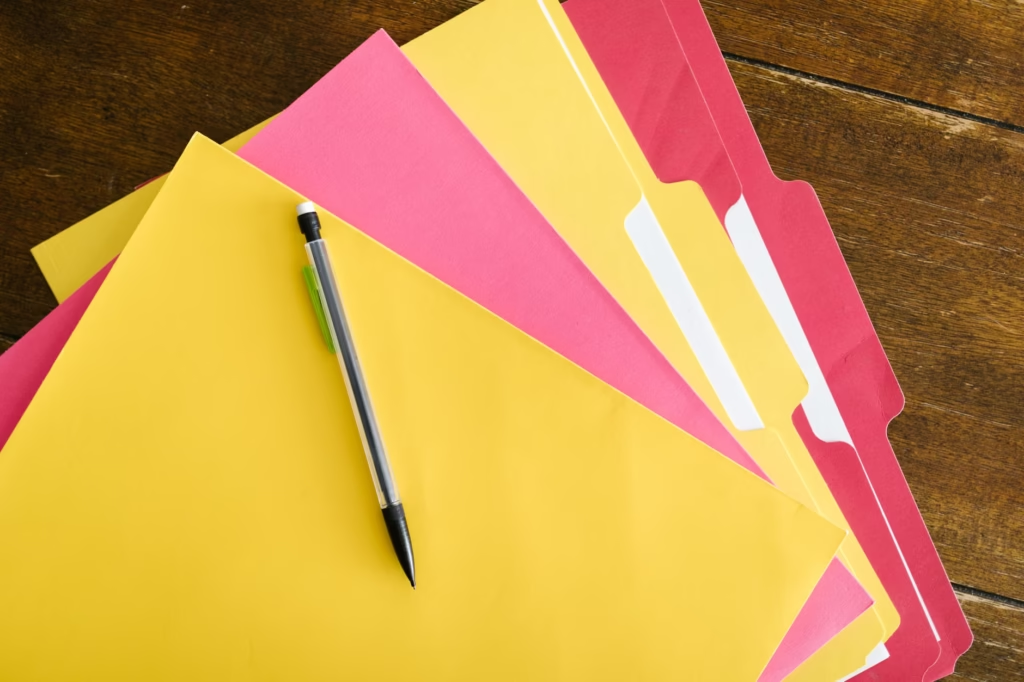
TipA simple hypothetical example: a student taking English, Algebra, Biology, and History will often do better with four clearly labeled folders and one master deadline list than with separate apps for notes, reminders, PDFs, and to-dos that never get checked together.
Plan the daily logistics before they become daily stress
For K-12 students especially, health and access paperwork should be handled early. CDC notes that school vaccine requirements differ by state, and it also recommends keeping vaccination records accessible because schools and other programs may request them. If medication forms, sports clearances, allergy plans, transportation changes, or emergency contacts apply, confirm the school’s exact requirements before the first day instead of assuming last year’s paperwork still covers this year. (cdc.gov)
Routines matter more than students tend to admit in August. CDC says adequate sleep supports focus, concentration, and academic performance, which is a practical reminder that a school plan is incomplete if it ignores bedtime, device charging, lunch prep, and the time it actually takes to get out the door. (cdc.gov)
- Test the morning route once if the school, bus stop, or commute is new.
- Put chargers, ID cards, keys, headphones, and transit passes in a fixed home so they are not floating around the house.
- Save important phone numbers and office emails in the phone before school starts.
- Decide where completed forms will be stored in case the school asks for them again.
- Build a simple meal and water plan for long days, especially if lunch periods are early or after-school activities run late.
- If mornings are chaotic, lay out clothes, materials, and anything that must be signed the night before.
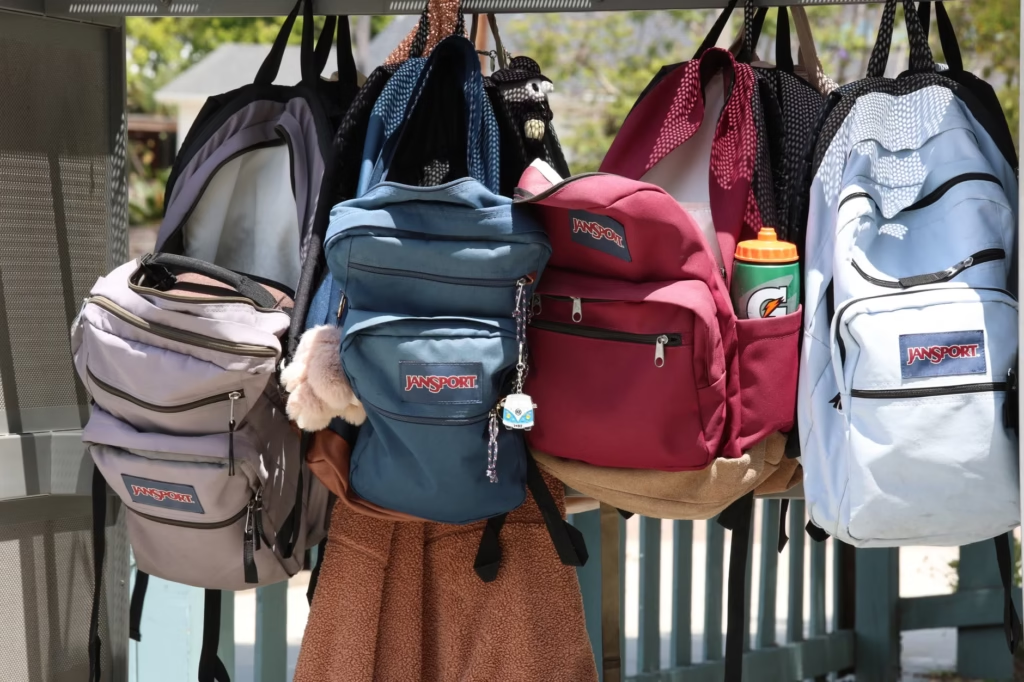
Make the first week easier than your ideal routine
A common mistake is planning for the student you hope to become instead of the week you are actually about to live. The first week rarely matches the polished version of school. Syllabi change, teachers add supplies, clubs move meeting times, and the commute may take longer than expected. So start smaller. Instead of promising three perfect hours of homework every night, block one realistic study window on each school day and one catch-up block on the weekend. Once the real workload becomes clear, expand from there.
- After day one, update the calendar with every due date and recurring class expectation you received.
- After day two or three, remove supplies, apps, or routines that already feel unnecessary or confusing.
- By the end of week one, identify one bottleneck, such as a missed bus, a late bedtime, or papers piling up loose in the bag.
- Fix that bottleneck with one concrete change rather than rebuilding the whole system at once.
- Repack, reset, and review the next week’s schedule before Sunday night so week two starts cleaner than week one did.
A back-to-school checklist works when it reduces friction, not when it looks impressive. If the calendar is accurate, materials have a home, forms are handled, and the first week leaves room to adjust, school starts with much less avoidable stress. The best plan is the one a student can still follow when the year stops feeling new.
References
- Federal Student Aid: 3 FAFSA Deadlines You Need To Know Now – https://studentaid.gov/articles/3-fafsa-deadlines/
- U.S. Department of Education: What is FERPA? – https://studentprivacy.ed.gov/faq/what-ferpa
- CDC: State Vaccination Requirements – https://www.cdc.gov/vaccines/php/requirements-laws/state-vaccination-requirements.html
- CDC: Keeping Track of Records – https://www.cdc.gov/vaccines-children/records/index.html
- CDC: Sleep and Health – https://www.cdc.gov/physical-activity-education/staying-healthy/sleep.html