
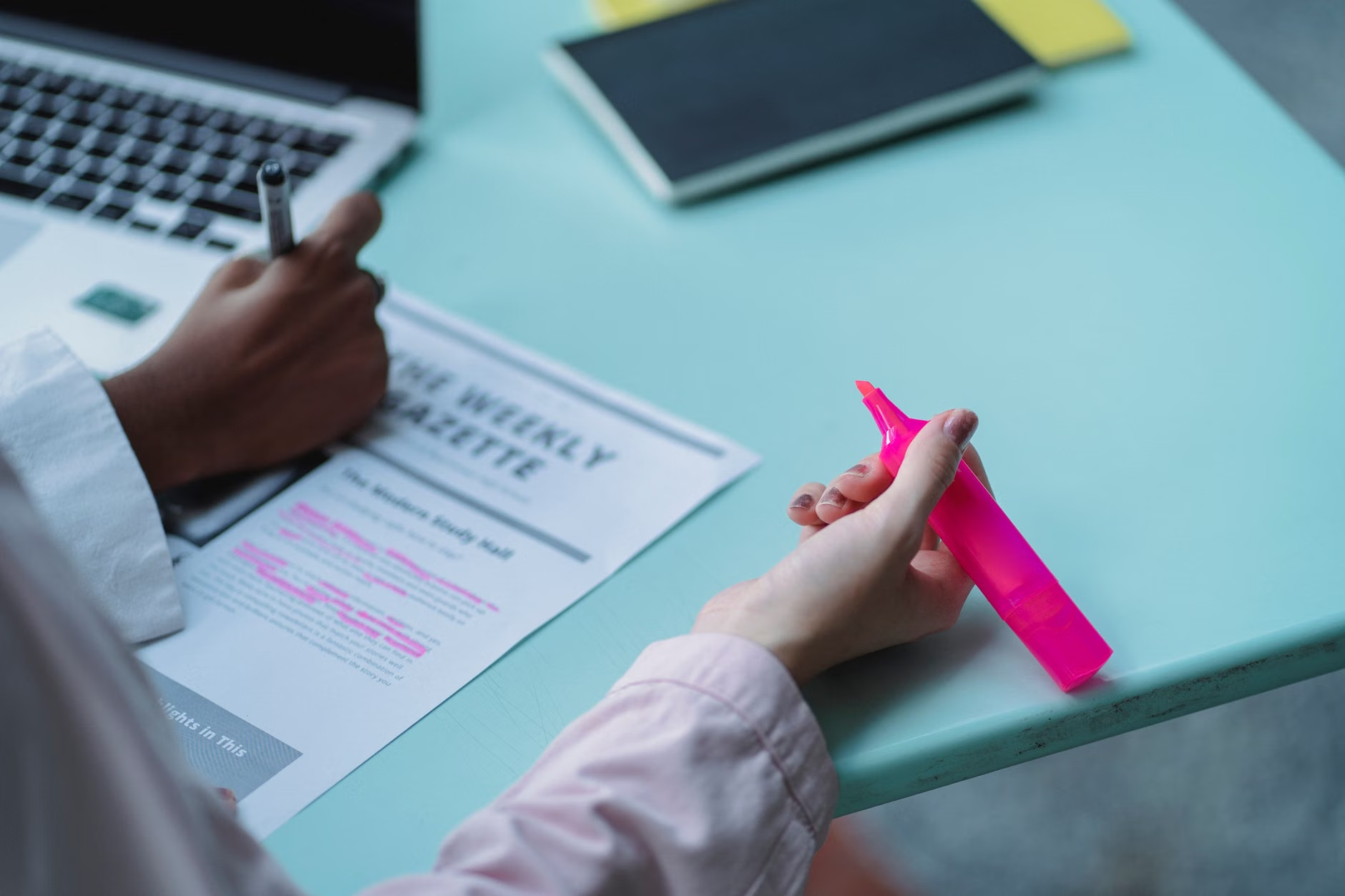
A calendar block labeled “research paper” looks responsible, but it leaves every decision until the moment you’re supposed to work. You still have to choose whether to search, read, outline, draft, or fix citations, which is an irritating amount of friction for a plan that was meant to reduce it.
I once caught myself moving a block called “paper research” from Tuesday to Thursday without ever defining it. When I renamed it “evaluate three candidate sources and record usable evidence,” the session finally had an ending, and that is the basic rule here: each week should produce something you can inspect.
A paper block is not yet a task
Replace “research paper, 7-9 p.m.” with an output such as “turn the prompt into a working question and three search terms.” The first entry reserves time, while the second tells you how to start and what completion looks like.
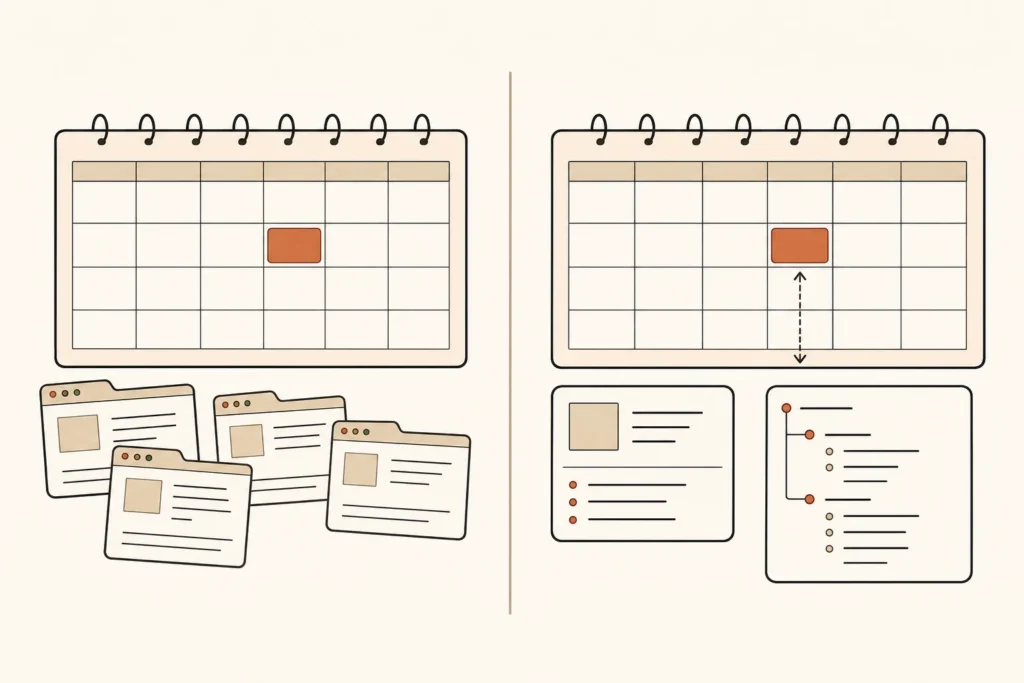
Build these outputs from the actual assignment requirements, including its genre, length, required source types, and deadline. A generic paper process should never quietly overrule the prompt.
Build backward from five artifacts, not the deadline alone
| Artifact | Done when | What it unlocks |
|---|---|---|
| Scope decision | You have a focused working question and useful search terms. | Directed source discovery |
| Source map | Usable evidence is recorded and remaining gaps are named. | Claim-and-evidence outline |
| Claim outline | A provisional thesis, ordered claims, and evidence locations are visible. | Section drafting |
| Body section plus gap list | One claim has been tested in prose and missing support is identified. | Targeted research |
| Complete draft plus revision plan | Every necessary section exists and major argument problems are ranked. | Substantive revision |
The outputs are provisional, especially the question and thesis. A literature review, position paper, or lab report may require a different chain, but every stage should still end with something more concrete than “made progress.”
Give source work its own finish line
Finding a promising article is not the same as deciding that it belongs in the paper. Separate discovery from evaluation, then keep a compact source map so collecting links does not masquerade as research, a distinction I find surprisingly satisfying once the browser tabs begin multiplying.
- Citation or link
- The claim or question the source may address
- Why it is credible and relevant
- The specific finding, quotation, or note worth returning to
If repeated searches return material that is off-topic, too shallow, outdated for the question, or unable to support a central claim, do not merely search longer. Use contingency time to narrow the question or replace the claim, because the problem is now scope, not effort.
Draft before research feels finished, but not before you have a direction
Begin a body section when you have a working claim, know what job it performs in the argument, and have enough evidence to test the explanation. I find introduction-first drafting overrated when the argument is still moving, so start with the clearest body section and keep a visible gap list instead of stopping mid-paragraph for another search.
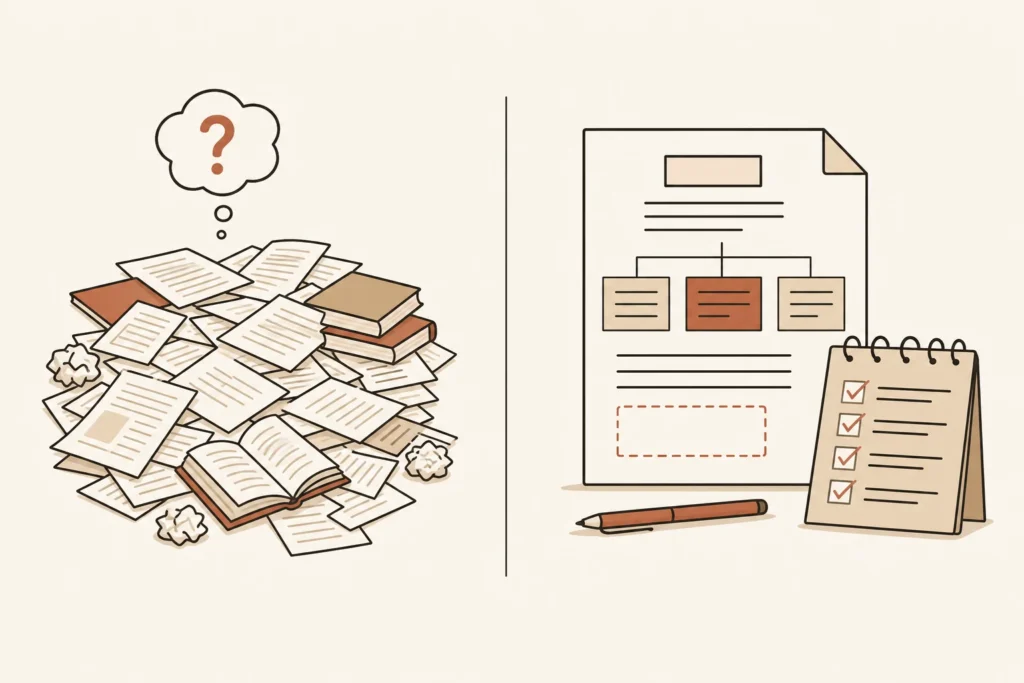
A partial draft is diagnostic: it can expose unsupported leaps, repeated points, missing counterevidence, or a thesis that needs to change. That is useful rerouting, but drafting into an undigested source pile without a focused question usually creates pages that are difficult to organize later.
Fit the paper around coursework with two kinds of weekly blocks
Fixed classes, shifts, commuting, care responsibilities, and recurring near-term assignments form the week’s frame. They are not evidence that you lack commitment, and pretending those hours are freely available only creates a very organized way to be surprised.
- Place one protected, higher-focus anchor block for evaluating difficult sources, synthesizing notes, outlining, or drafting.
- Add one shorter maintenance block for capturing citations, screening source candidates, updating the gap list, or defining the next action.
- Give the week one artifact target, or a clearly defined portion of one, rather than a promise to make substantial progress.
If your schedule changes frequently, keep a ranked list of small fallback actions for spare pockets of time, but save synthesis and drafting for the next protected block. Ten scattered minutes can clean a citation or classify a source, but they are a poor substitute for sustained argument work.
Put uncertainty next to the stage that creates it
Reserve one movable, paper-sized buffer during the research-and-drafting middle, ideally before the full draft or planned feedback. Attach it to the problem that actually appears instead of treating it as vague extra time.
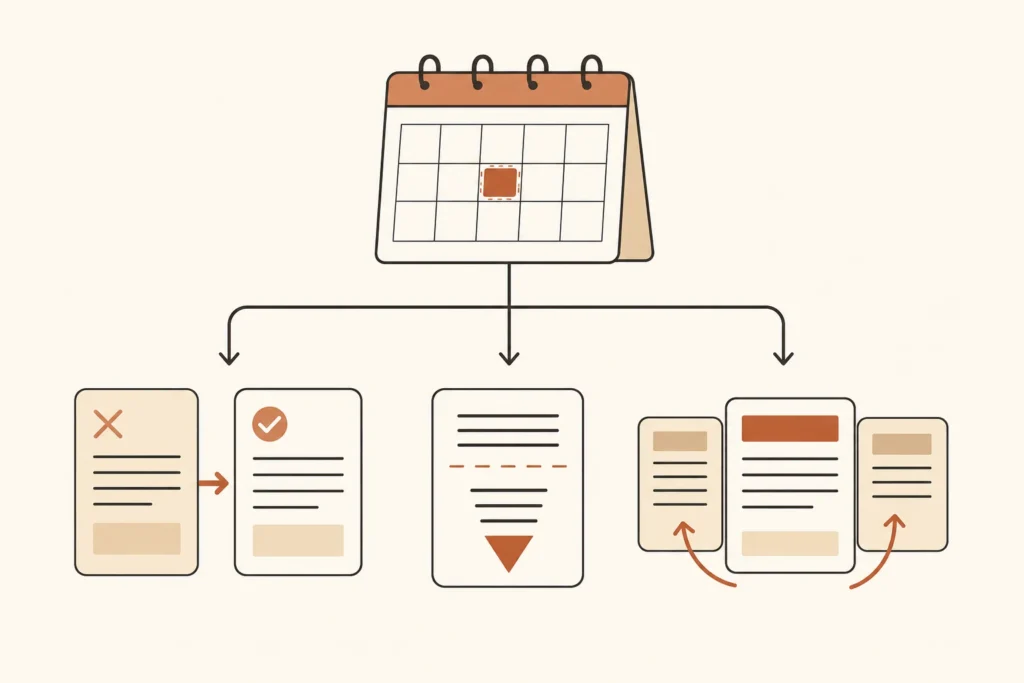
- Weak evidence: narrow or replace the unsupported claim.
- Changed thesis: rebuild the claim outline before drafting farther.
- Structural feedback: revise the argument and organization before editing sentences.
If the buffer goes unused, spend it on early revision or citation checking, not bonus browsing. During a bad week, preserve the smallest next artifact, move displaced work into the buffer, and reduce optional polish before cutting the stages needed to produce and revise a complete draft.
Schedule revision as argument work first and polish second
Revision tests the thesis, logic, organization, evidence coverage, and what a reader can follow, while editing improves sentences and mechanics afterward. Schedule available feedback while the draft is still changeable, then reverse-outline it by writing each paragraph’s main point and its job in the argument beside the draft, which quickly exposes repetition, weak transitions, and unsupported sections.
For next week, write one artifact at the top of your plan before choosing the paper block. “Build a source map for two main claims” gives you a workable Tuesday evening; “work on paper” gives you two hours of decisions and the same background dread on Wednesday.
Sources and references
- University of Pittsburgh College of General Studies: Time Management Strategies
- George Mason University Writing Center: How to Write a Research Question
- Purdue University Online Writing Lab: General Guidelines
- University of Maryland Global Campus Effective Writing Center: The Writing Process: Set a Schedule that Works for You!
- George Mason University Writing Center: Revising