

You may have forgotten a great deal and still not need to relearn the entire course, because the useful question is which missing knowledge will cost you answers and how to make it usable again. Treat the final as a prioritization problem, not a demand to rebuild every unit equally.
You Do Not Need to Relearn the Course in Order
Chronological rereading feels responsible because every page becomes familiar again, but familiarity does not show whether you can explain, select, or apply an idea without the page open. Practice testing and distributed practice generally offer more useful learning, while a brief source check still helps when it prepares you for another attempt.
I once opened an old unit outline, recognized every heading, then covered the page and could not explain the first one. I don’t love how reassuring rereading can feel in that moment, because a weak no-notes attempt feels worse but gives you directions, while recognition mostly gives you a pleasant afternoon.
Make a One-Page Course Map Before You Fix Anything
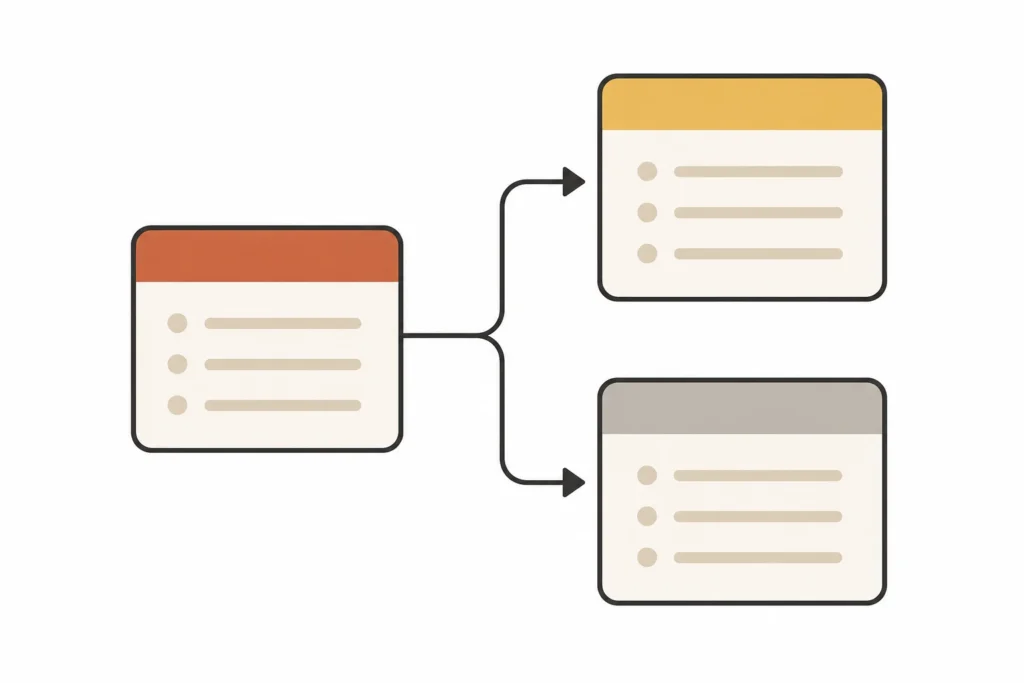
Use the exam guide, syllabus, learning objectives, announcements, returned work, and topics repeatedly emphasized in class to set the actual scope, and give each unit a one-line label such as a core concept, process, argument, method, or formula family. On that rough map, draw only the forward links that matter, marking where an early idea supports a later method, supplies a contrast, or appears inside several later units, and circle ideas with several links or ideas needed to begin later problems. Stop when the map tells you what deserves testing, because I’m not a fan of turning a useful diagnostic into a decorative master outline.
Diagnose Old Units With Retrieval, Not Recognition
Take one brief no-notes sample from each early unit, matched to the course: solve a representative problem, explain a mechanism, outline a likely essay response, compare two ideas, or define and apply a term. You are locating gaps, not sitting a miniature final for every chapter.
- Green: you can produce and use the idea without substantial help.
- Yellow: your answer is partial, slow, or uncertain, but you can make a reasonable start.
- Red: you cannot begin, choose a method, or explain the idea without substantial help.
These colors are planning labels, not mastery cutoffs, so beside each yellow or red result record the actual failure: a missing fact, confused concepts, wrong method choice, incomplete explanation, execution mistake, or time pressure. “Bad at Unit 3” is vague and discouraging, but “cannot distinguish these two methods” is a usable study task.
Choose What to Repair First With Three Signals
| Signal | Question | Useful evidence |
|---|---|---|
| Exam emphasis | Is this likely to appear or earn substantial credit? | Objectives, review materials, returned work, repeated class themes |
| Connection value | Does later material depend on it? | Course-map links and recurring methods |
| Diagnostic result | Can you retrieve and apply it now? | Green, yellow, or red attempt plus error type |
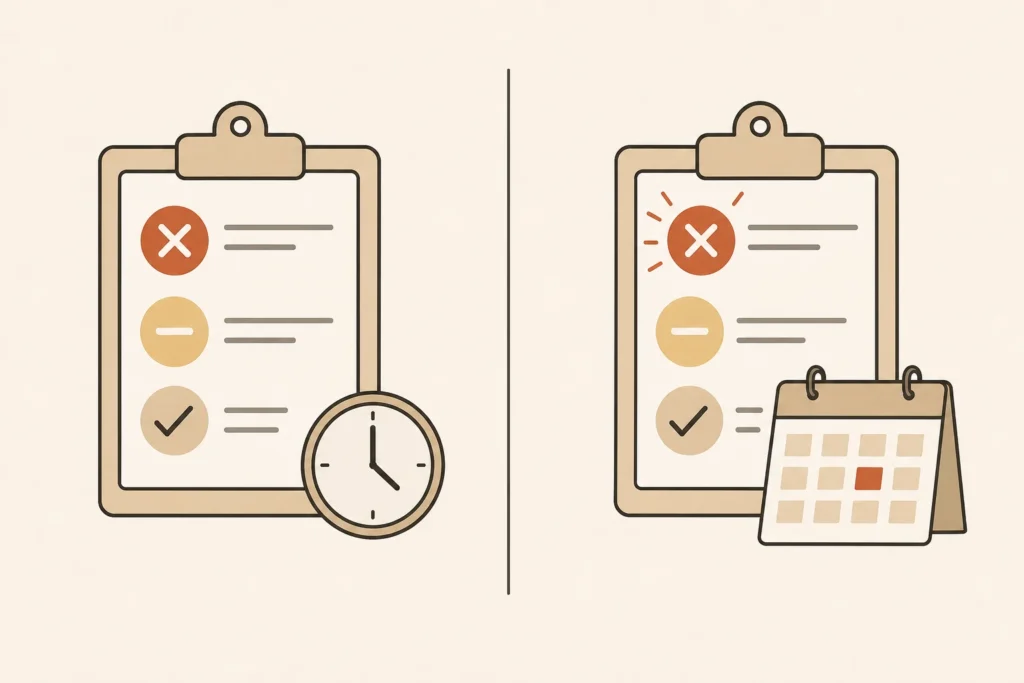
Repair a red unit now when it is likely to matter on the exam or supports later material. Schedule a near-term recheck for yellow connector units, and preserve green units through occasional mixed prompts instead of reviewing them in full.
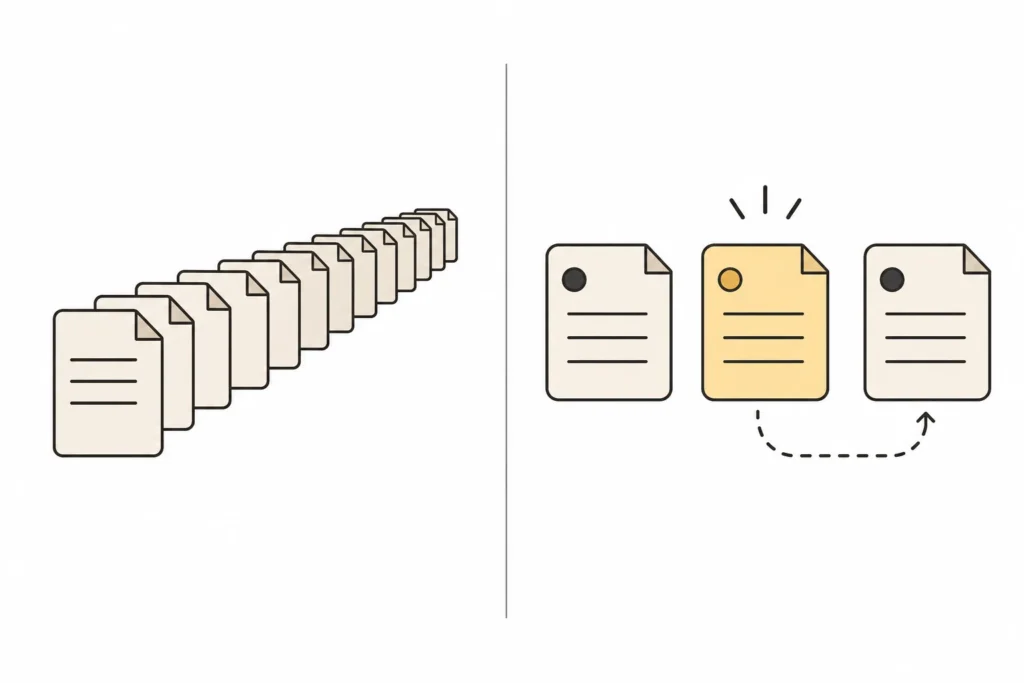
Connection value can override direct weighting, so a lightly weighted early method deserves attention if several later questions require it, while an isolated detail can wait even if its chapter looks intimidating. I find it mildly maddening when students spend two hours polishing a comfortable, low-impact topic because it feels productive, but that is exactly what a priority rule prevents.
Repair the Gap Until You Can Use It
Inspect the relevant notes, feedback, reading, or worked example only long enough to locate the missing rule, fact, or connection, close the source, and try again without copying the model. Retrieve the explanation, solve a similar problem, or produce the outline, and add one bridge prompt about where the idea appears elsewhere in the course so it can enter a future mixed set.
In problem-solving subjects, separate choosing the wrong method from executing the right method badly: selection errors call for comparing cues and decision rules, while algebraic, coding, or procedural errors call for practice on the failing step. The satisfying part is often discovering that the missing piece is one decision, not an entire chapter.
Use Cumulative Practice as Feedback, Not a Verdict
Build small mixed sets from older and recent units, especially connected topics or methods that are easy to confuse. Early sets can be untimed or lightly timed because they diagnose gaps, while a later rehearsal should match the final’s question formats and time constraints more closely.
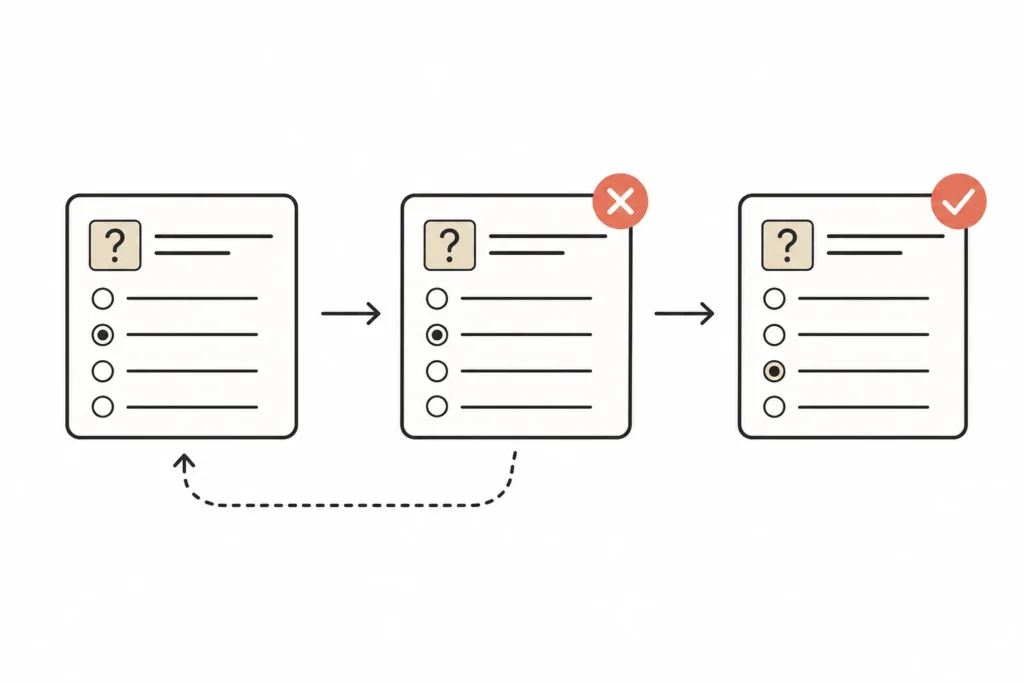
For every miss, assign an action rather than merely recording a score: relearn a fact, compare confused concepts, redo a method-selection example, practice an application, or adjust pacing. I get frustrated when a practice score is treated as a verdict, because its real value is the finite worklist it creates for the next block.
A repaired red unit belongs in a few prompts in the following mixed session and should return with other study between appearances. Repeated retrieval and spaced returns help keep knowledge available, but no interval fits every countdown, and mixing is most useful when the exam requires you to distinguish related methods rather than bounce among unrelated topics.
Return to Repaired Material on a Schedule That Fits the Time Left
| Time remaining | Priority |
|---|---|
| A week or more | Diagnose broadly, repair red priorities, recheck them, then complete mixed and exam-like practice. |
| Two to six days | Map major links, repair high-value red units, and use one or two mixed rechecks. |
| One day | Choose a short high-payoff list, then practice retrieval and application rather than rebuilding notes. |
Do not cross off a repaired unit because you reread it or answered once with the example still fresh. Replace “review the early units” with a concrete next block such as “compare Methods A and B without notes, solve two mixed problems, and recheck both tomorrow,” which is small enough to begin and specific enough to show whether the material came back.
Sources and references
- Science, American Association for the Advancement of Science: Karpicke and Roediger on repeated retrieval during learning (2008-02-15)
- Psychological Science in the Public Interest: Dunlosky et al. review of learning techniques (2013-01-08)
- Psychological Science: Soderstrom, Kerr, and Bjork on retrieval and spacing (2015-12-16)
- Memory & Cognition: Foster et al. on why interleaving can improve math learning
- Princeton University McGraw Center for Teaching and Learning: Princeton McGraw Center guidance on preparing for finals